"How much do pavers cost?" — it's one of the first questions every California homeowner asks when planning a driveway, patio, or walkway project. The honest answer is: it depends. Paver projects vary widely based on material choice, project size, site conditions, and design complexity. In this guide, we'll break down all the factors that influence pricing so you can plan your project with confidence.
At TP Pavers, we've been installing paver surfaces across the Bay Area for over 20 years. As a family-owned company with a lifetime guarantee, we believe in transparency — which is why we provide free, detailed estimates for every project. While we can't give a one-size-fits-all price, we can help you understand exactly what goes into the cost of your specific project.
Factors That Affect Paver Cost
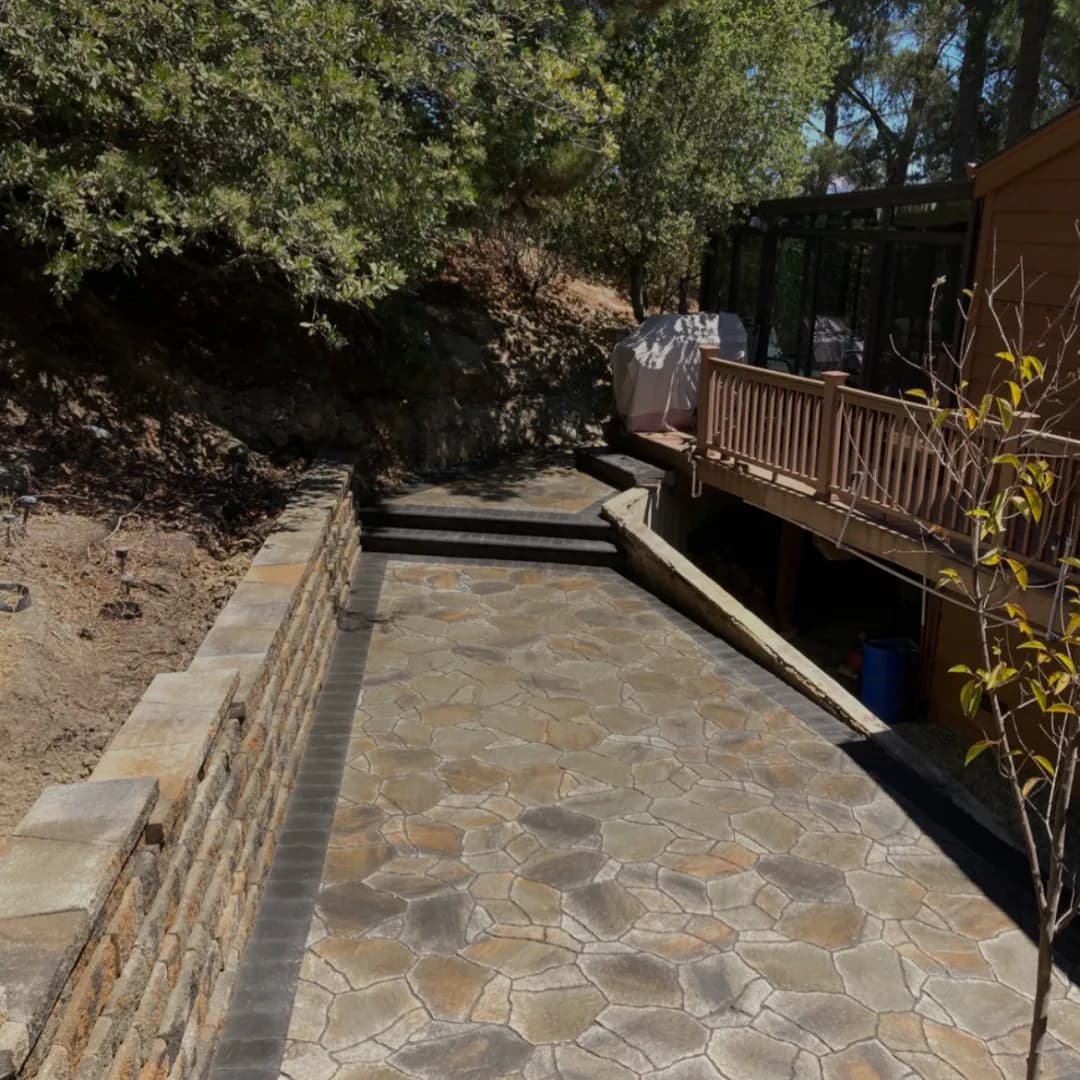
When asking "how much do pavers cost," it's important to understand that the final price is determined by several interconnected factors. Here are the main variables:
Paver Material Type
Standard concrete pavers are the most affordable. Natural stone (travertine, bluestone, granite) costs significantly more. Porcelain pavers fall in between. Each material has different durability and aesthetic properties.
Project Size
Larger projects benefit from economies of scale — the per-square-foot cost typically decreases as the project grows. A 200 sq ft patio will cost more per square foot than a 1,000 sq ft driveway.
Design Complexity
Simple running bond patterns are faster and more material-efficient. Intricate patterns like herringbone or custom designs require more cuts, more labor, and generate more waste.
Site Conditions
Existing surface removal, slope grading, drainage requirements, soil type, and access difficulty all affect labor and material needs. A flat, clear site costs less than a sloped lot with poor soil.
Material Types & Their Cost Tiers
One of the biggest factors in how much do pavers cost is the material you choose. Here's a general overview of the main material categories from most affordable to premium:
- Standard concrete interlocking pavers: The most popular and cost-effective option. Available in a wide range of colors, shapes, and textures. Excellent durability and the broadest design flexibility. This is what most homeowners choose for driveways and patios.
- Tumbled or textured concrete pavers: A step up from standard, these pavers have an aged or natural stone look created through a tumbling process. They offer more character and visual depth at a moderate price increase.
- Porcelain pavers: Ultra-modern, extremely low maintenance, and available in stunning faux-stone and faux-wood finishes. Porcelain is harder and more stain-resistant than concrete but comes at a higher material cost.
- Natural stone pavers: Travertine, bluestone, flagstone, and granite offer unmatched natural beauty. Each piece is unique. Natural stone is the premium choice for luxury installations and carries the highest material cost.
💡 Pro Tip from Our Team
Don't choose pavers based on material cost alone. Consider the total value — including longevity, maintenance requirements, and aesthetic impact. A slightly more expensive paver that lasts decades and requires less maintenance can actually be more economical over time than the cheapest option.
Not sure where to start?
Our team has 20+ years of experience helping California homeowners. We'll walk you through your options — no pressure, no obligation.
What's Included in a Professional Paver Installation
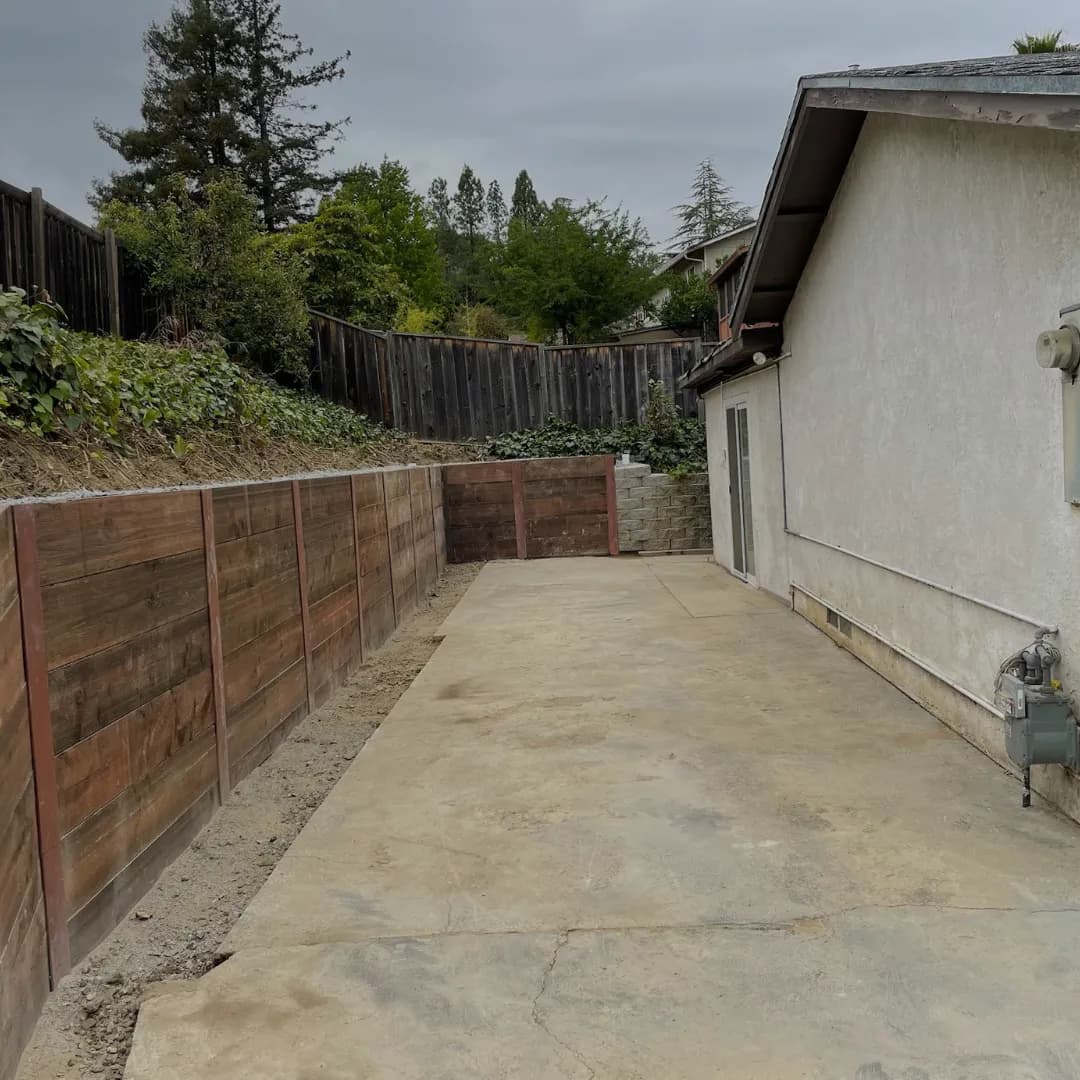
When evaluating how much do pavers cost, make sure you understand what's included in the estimate. A reputable contractor's price should cover the full installation process, not just laying pavers on the ground:
- Demolition and removal: Removing your existing surface (concrete, asphalt, etc.) and disposing of debris properly
- Excavation: Digging to the proper depth for the base system — typically 8-10 inches for driveways, 6-8 inches for patios
- Base preparation: Installing and compacting multiple layers of aggregate to create a stable, well-draining foundation
- Edge restraints: Aluminum or concrete borders that keep pavers from shifting outward over time
- Sand bedding: A precise layer of sand that pavers are set into for level, uniform installation
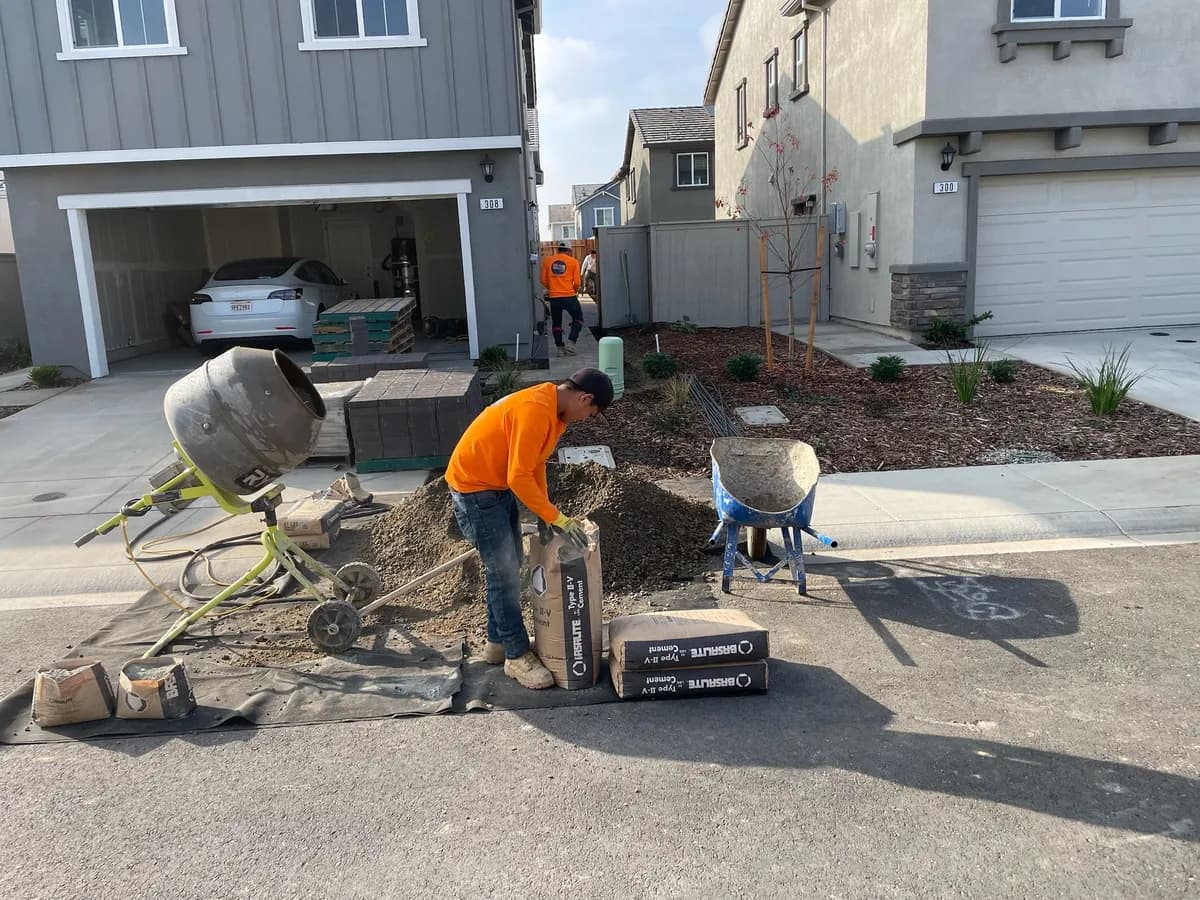
- Paver installation: Laying and cutting pavers according to the design pattern
- Polymeric sand: Filling joints with premium polymeric sand that hardens to prevent weeds and ant infestations
- Compaction: Final vibrating compaction that locks all pavers into place
- Cleanup: Removing all construction debris and leaving your property clean
At TP Pavers, all of these steps are included in every estimate. Beware of contractors who quote a low price but exclude essential steps like proper base preparation or polymeric sand — these shortcuts lead to premature failure.
Project Type & Size Considerations
The type and size of your project significantly impacts how much do pavers cost. Here's how different project types compare:
- Walkways: Typically the smallest projects. The narrow width means more edge cutting per square foot, but the overall cost is lower due to smaller total area.
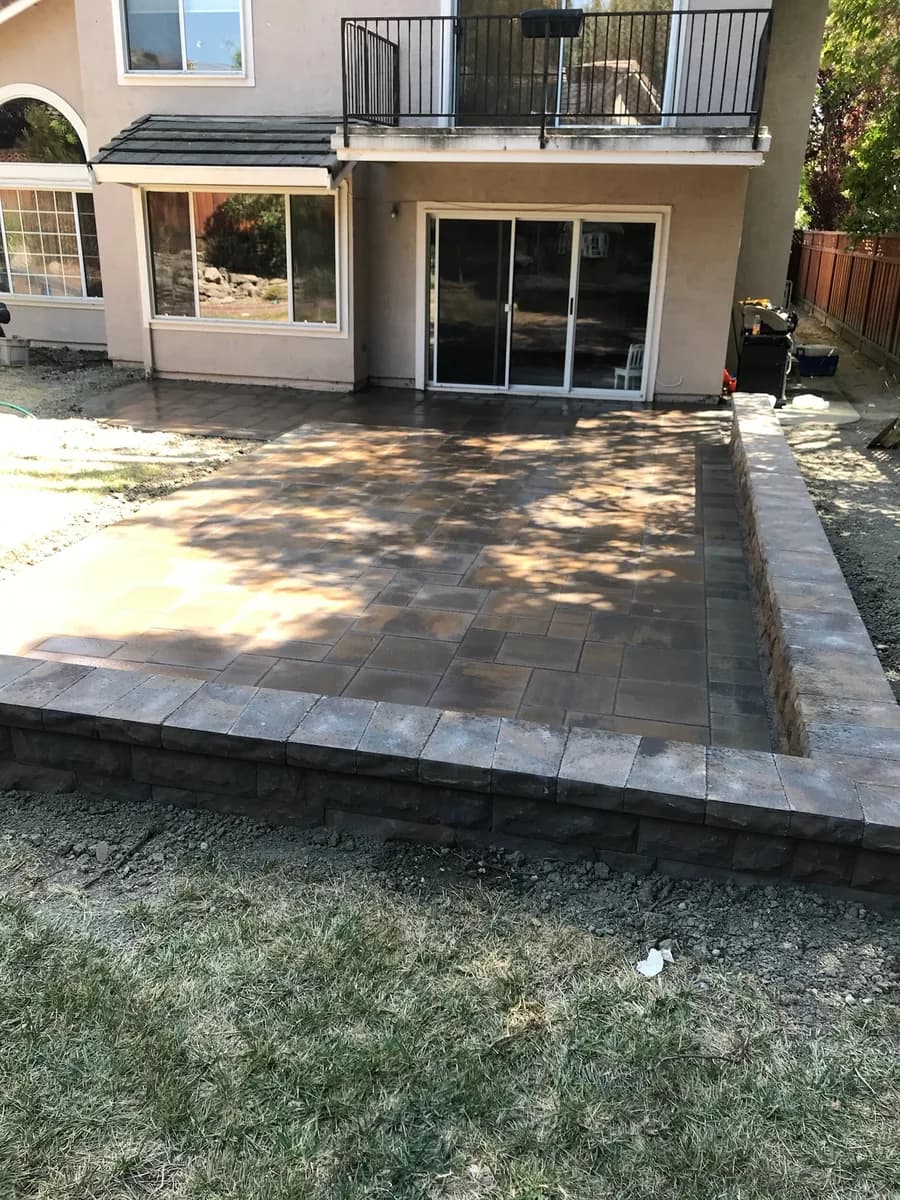
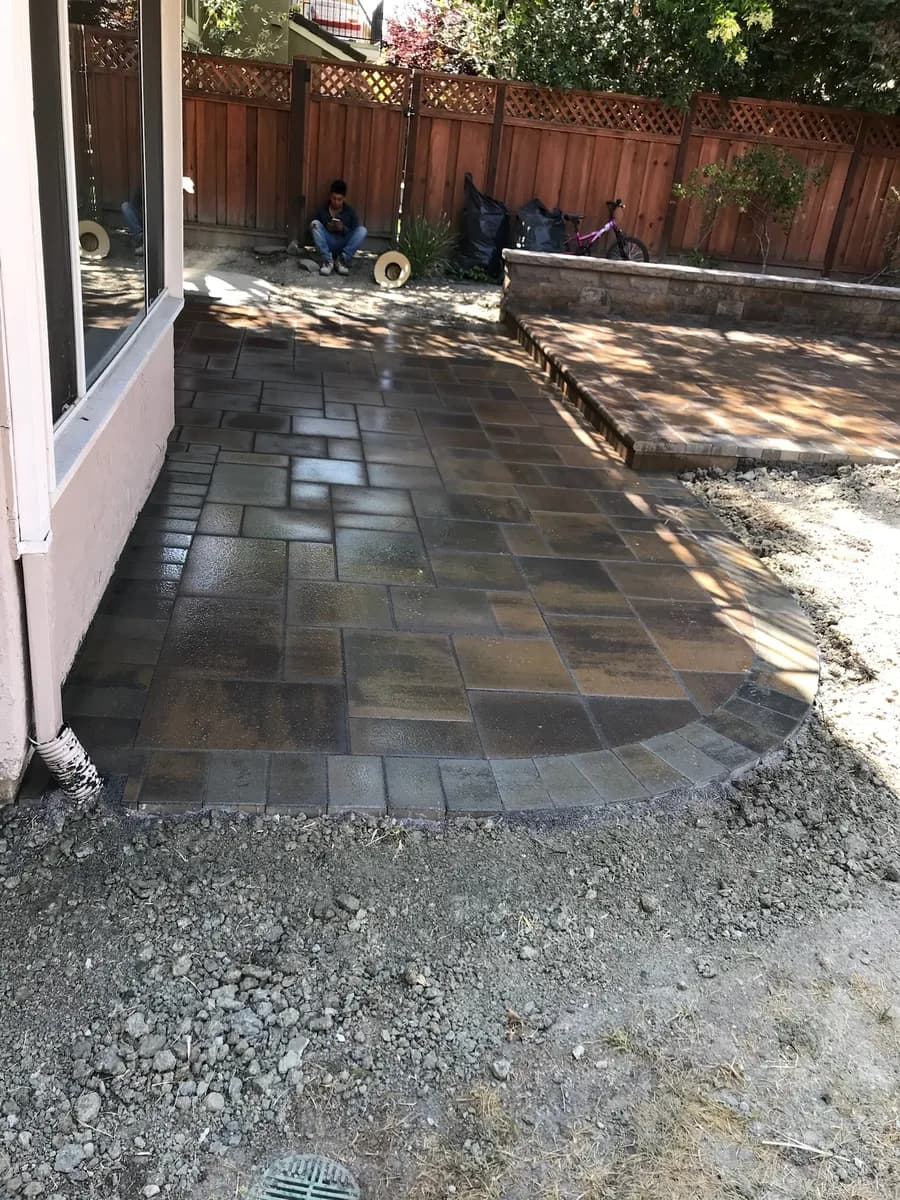
- Patios: Mid-range in both size and cost. Design complexity varies widely — a simple rectangular patio costs less than one with curves, built-in fire pit, or seat walls.
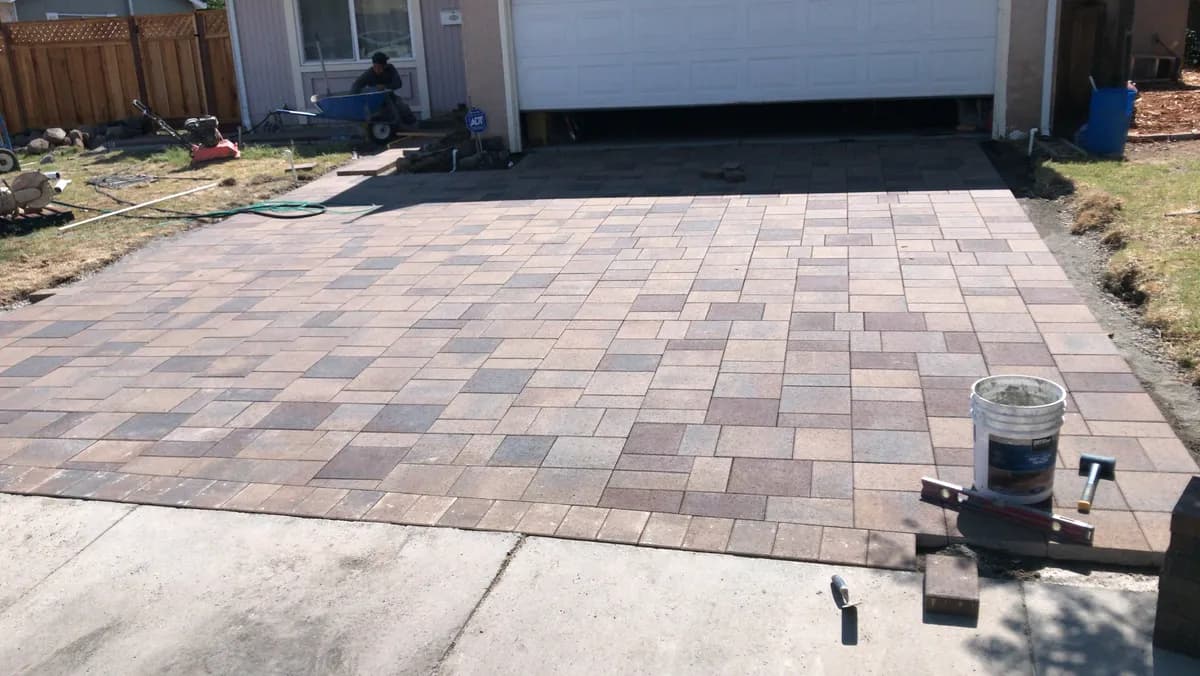
- Driveways: Require a heavier base system for vehicle traffic, which adds to preparation costs. However, the larger area means better per-square-foot pricing.
- Pool decks: Require specific paver types rated for pool environments and non-slip surfaces. Additional drainage considerations add to the project scope.
- Full property transformations: When you combine driveway, walkway, patio, and retaining walls in one project, you get the best overall value because of shared mobilization, equipment, and material deliveries.
How to Get an Accurate Estimate
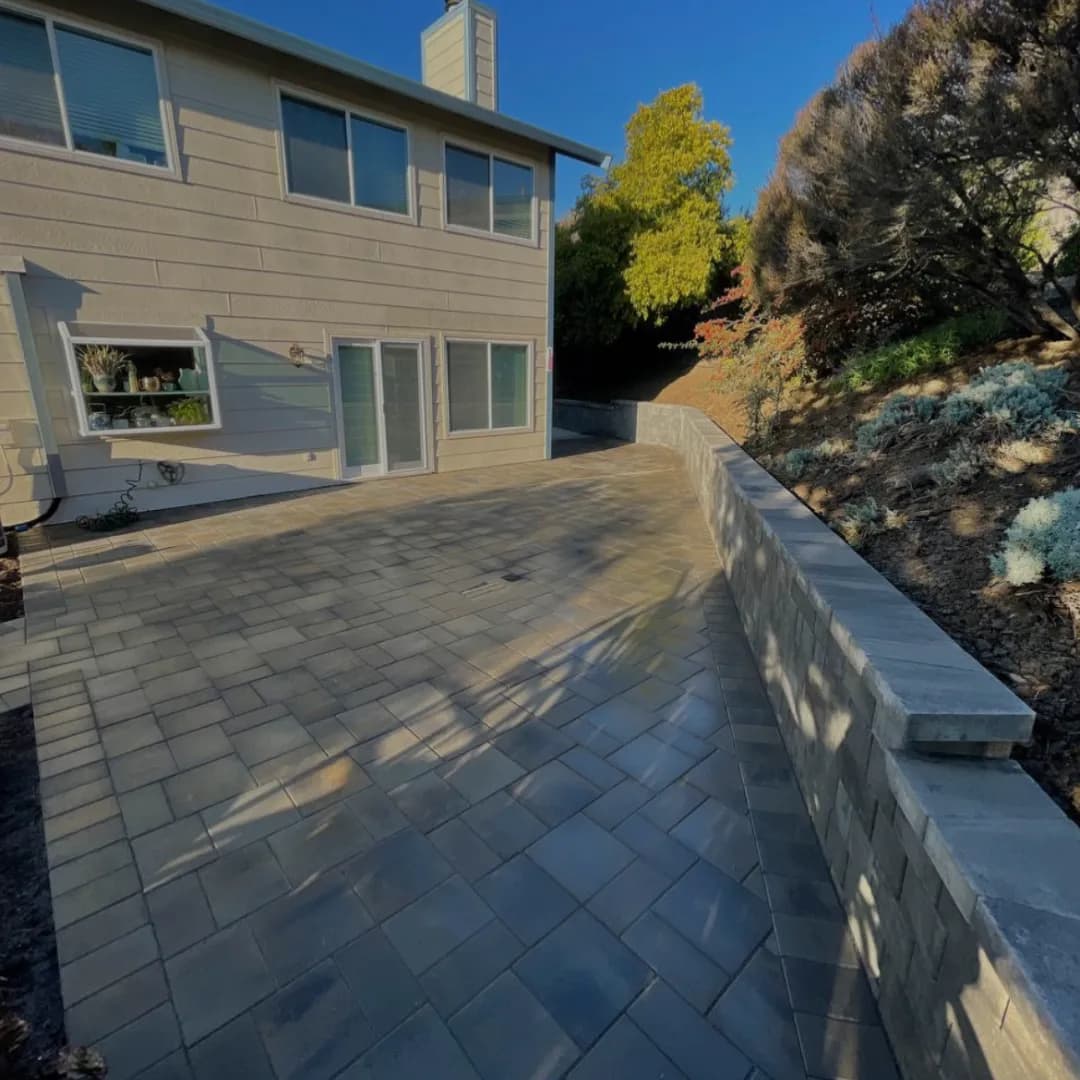
Online cost calculators and national averages can give you a rough ballpark, but they can't account for your specific site conditions, local material availability, and Bay Area labor markets. The only way to get an accurate answer to "how much do pavers cost" for your project is a professional on-site estimate.
Here's what to look for in a quality estimate:
- On-site visit: Any contractor who quotes a price without seeing your property is guessing. Site conditions affect pricing significantly.
- Detailed line items: A good estimate breaks down demolition, base work, materials, labor, and any additional features separately.
- Material specifications: The estimate should specify the exact paver brand, style, and color — not just "concrete pavers."
- Base system details: How deep is the aggregate base? What type of sand? What edge restraint? These details determine longevity.
- Warranty information: What's covered and for how long? At TP Pavers, we include a lifetime guarantee on every project.
- Timeline: A clear start date and estimated completion timeframe.
💡 Pro Tip from Our Team
Get at least 2-3 estimates and compare them carefully. The lowest price isn't always the best value. Look at what's included, the contractor's experience and reviews, and the warranty offered. A well-installed paver surface with a lifetime guarantee is worth more than a cheap installation that fails in a few years.
The ROI of Paver Installation
While understanding how much do pavers cost upfront is important, it's equally important to consider the return on investment. Pavers consistently deliver strong ROI in several ways:
- Home value increase: A paver driveway or patio can significantly increase your home's market value, with real estate professionals reporting strong returns on hardscape investments
- Longevity: With a 50+ year lifespan, pavers outlast concrete (15-25 years) and asphalt (10-15 years) — meaning you invest once instead of replacing multiple times
- Low maintenance costs: Pavers require minimal ongoing maintenance compared to concrete (which cracks) or asphalt (which needs re-sealing every 2-3 years)
- Curb appeal: The visual impact is immediate and lasting — pavers make your property stand out in the neighborhood and on real estate listings
- Repairability: If damage occurs, you replace individual pavers — not the entire surface. This dramatically reduces lifetime maintenance costs.
Why Choose TP Pavers for Your Project
When you're ready to move beyond "how much do pavers cost" and into actually planning your project, TP Pavers is here to help. Our free, no-obligation estimates are detailed, transparent, and tailored to your specific property and goals.
- Free on-site estimates — we visit your property and provide a detailed, line-item quote
- Lifetime guarantee on all installations
- 20+ years of Bay Area experience
- Family-owned and operated — we treat every project like it's our own home
- Transparent pricing — no hidden fees, no surprises
We serve homeowners across Contra Costa County, Alameda County, Marin County, San Mateo County, Santa Clara County, and Solano County — from Walnut Creek to Oakland to San Jose.
Get Your Free Paver Estimate
Every project is unique, and the best way to know exactly what your paver project will cost is a free, on-site estimate from our experienced team. No obligation, no pressure — just honest numbers.